
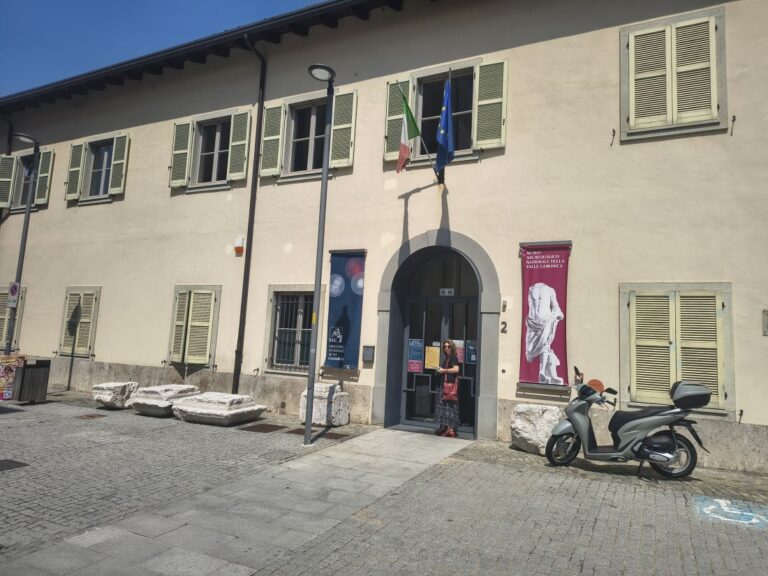
Let’s take a journey to the provinces today. Towards the melting glaciers and small towns nestled in the valleys. The Pisogne-Edolo road, leading towards the Tonale Pass, was marked out centuries ago as an ancient trail connecting the basin of Lake Iseo with the Alps. Following it along the Oglio River, we see a vast area, open wide as a gate and yet protected by monumental peaks. It is a sign that we have reached our destination, where every layer of earth tells a poignant story of prehistoric tribes who left us signs on the rocks and of the power of Rome, which founded a city here. This land also conceals the dark secrets of the Middle Ages, which marked the valley with fire and fear. All of its heritage, from stone carvings to Roman artifacts, is meticulously collected and studied by the National Archaeological Museum in Cividate Camuno.
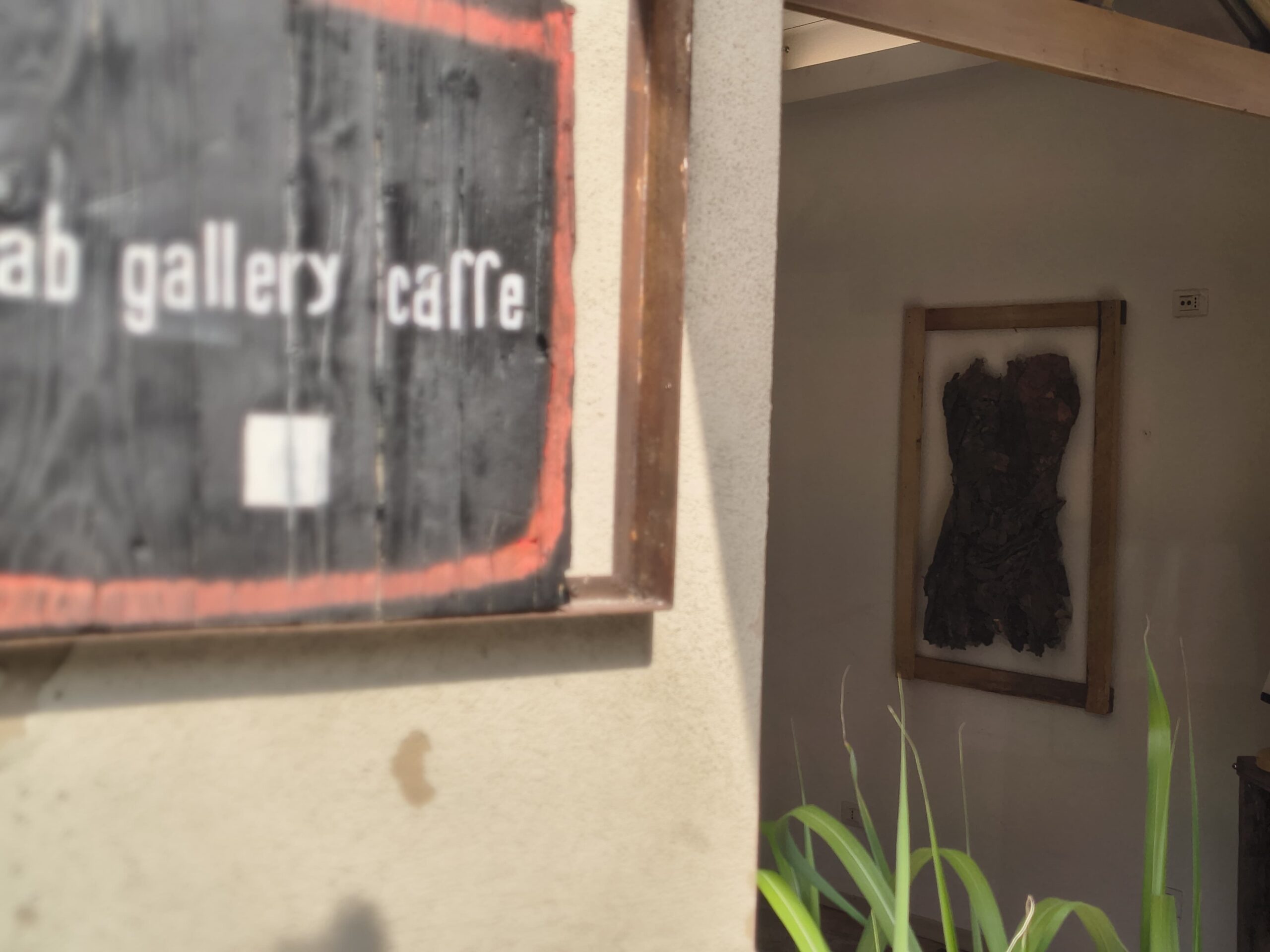
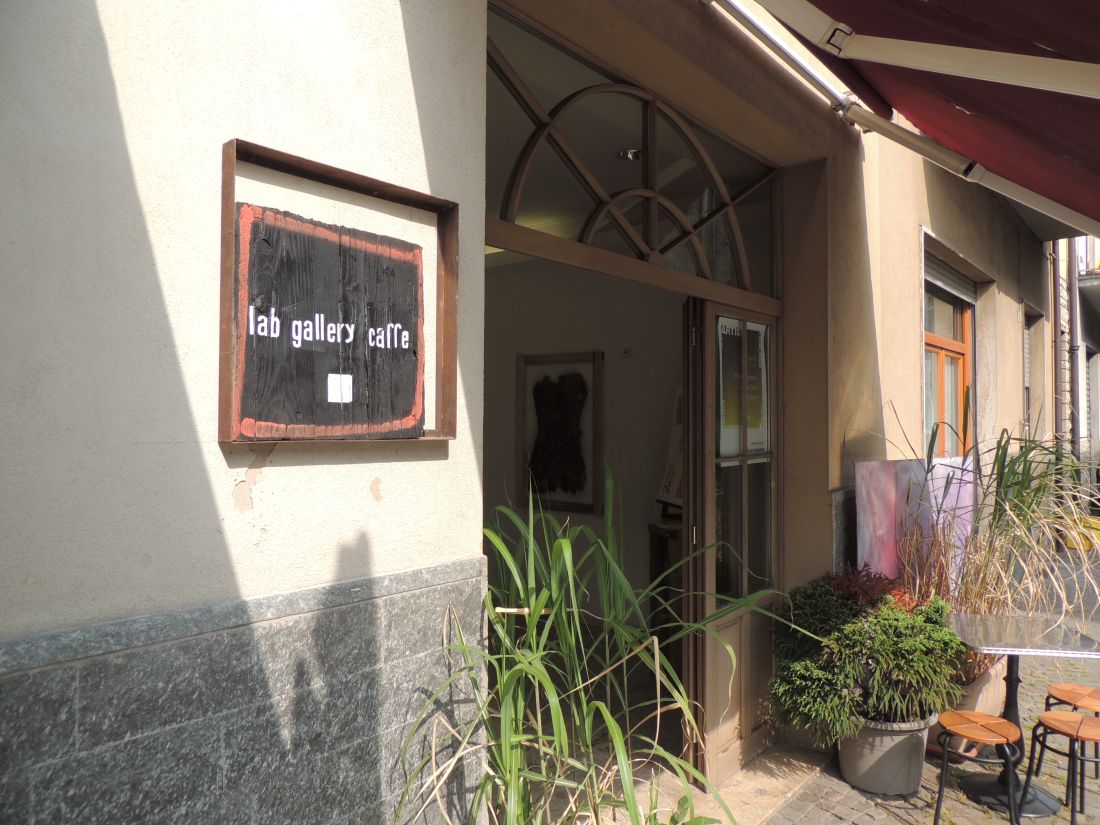
However, before we visit it, let’s stop on the main street and leisurely sip an espresso in a place of special gravity. Caffe del Corso Art is an address where intellectuals gathered even in times of wartime turmoil. Today, this small café with its well-stocked bar is simultaneously an art gallery, an exhibition space, and a laboratory. On any given day, we can meet laughing locals and artists engrossed in their work. It is the same this time. Work is in full swing, as an artistic action is planned for the evening. It aims to engage the local community and foster a sense of community around contemporary art. Three artists, previously unknown to one another, who have arrived in Italy from different parts of the world : Megan Segre, Jeannine Cook, and Flaminia Bonciani – will, by carefully and independently studying the Genius Loci of the place, attempt to inscribe the language of art into its rich historical context, creating a fascinating dialogue between the past and the present. Before we discover the source of their inspiration and how the artists responded to the call, let’s go back in time to embark on a journeythrough centuries of human destinies.
TIMELINE Patrimonio dell'Umanità
World Heritage Site
Prehistory and Antiquity
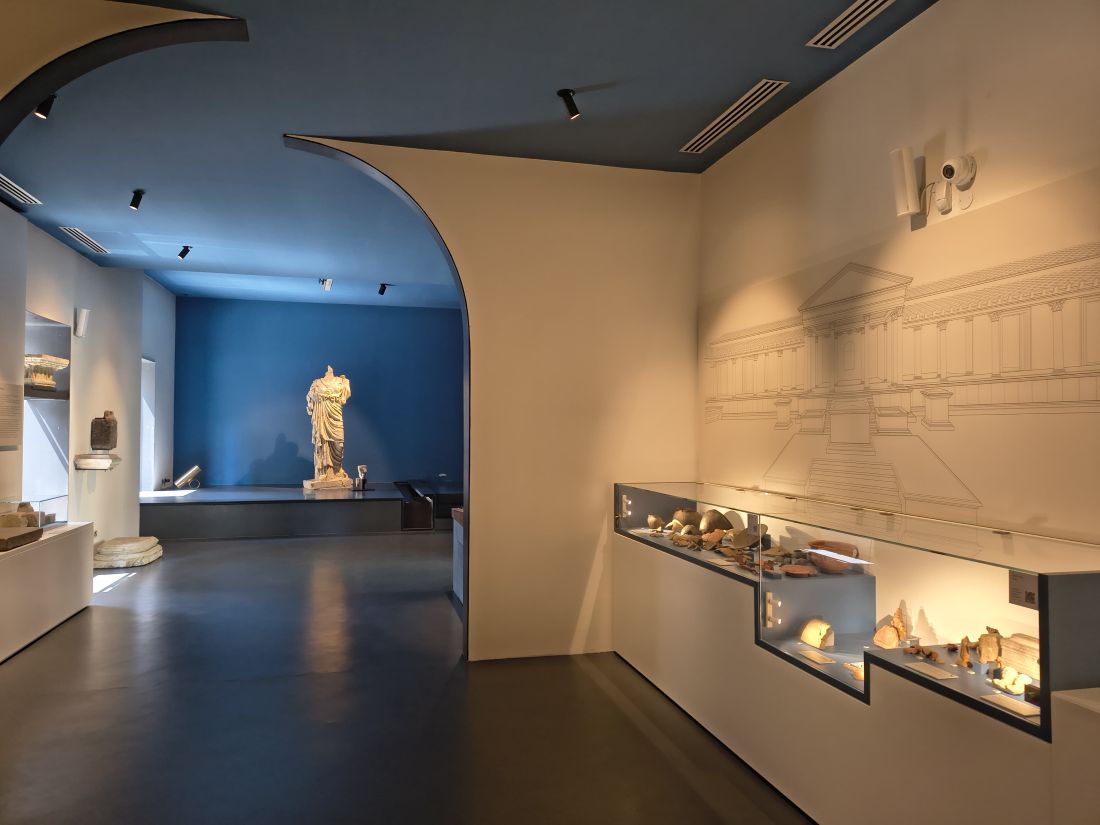
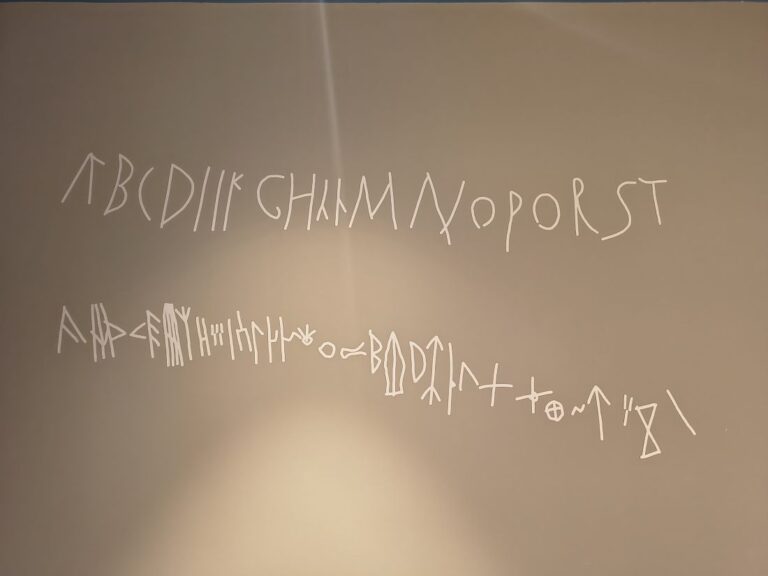
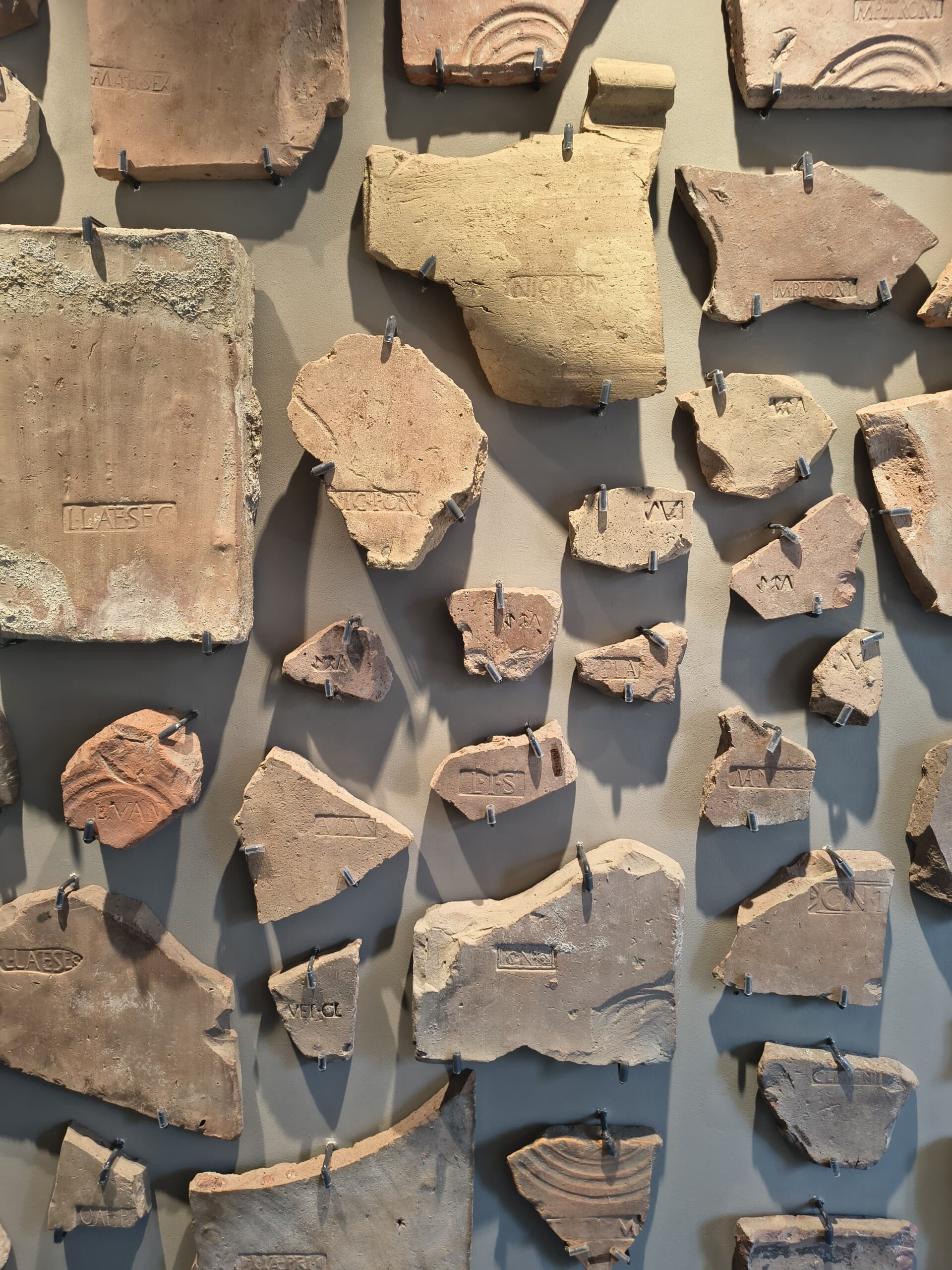
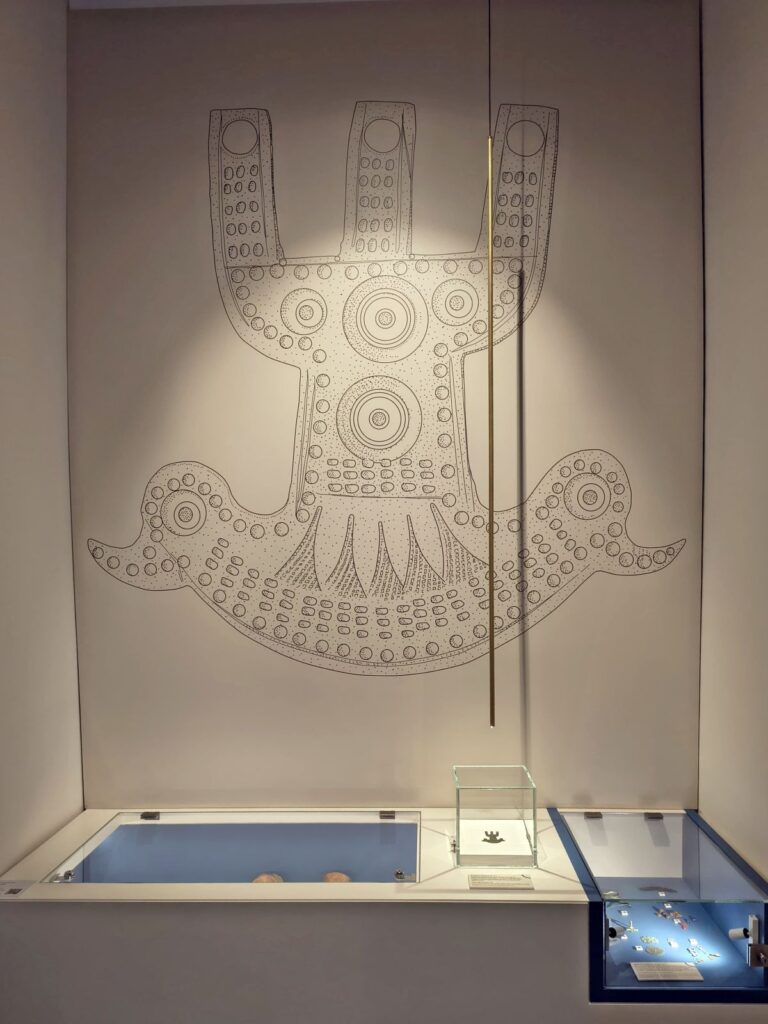
A visit to the museum is an absolute must. It is here, in this treasury of knowledge about ancient cultures, that we must seek our clues and meanings. The National Archaeological Museum in Cividate Camuno houses the most important finds from the Roman period but also studies the identity of the indigenous people – the Camunni. The encounter of their culture with the might of Rome resulted in a unique heritage. We begin our tour by meeting the Camunni tribe. We immerse ourselves in tales from the Stone Age, when the first nomadic groups arrived in the valley after the glaciers receded. The findings from studies of the rock carvings guide us through the development of this community. We observe the Neolithic revolution and the emergence of a complex social structure. We journey through the Bronze Age to the Iron Age. We notice a clear cultural influence from the Etruscans and Celts, visible in the themes of the depictions. During this time, thousands of engravings were made, showing scenes of daily life and rituals. We learn that the Camunni used their own script, the Camunic alphabet. It is from this period that one of the museum’s most precious exhibits originates: a bronze amulet, a priceless testament to Camunnian spirituality. 8 It is interpreted as an image of a local female deity associated with a water cult. We make a mental note of this find and its significance, as it will play an important role in our story.
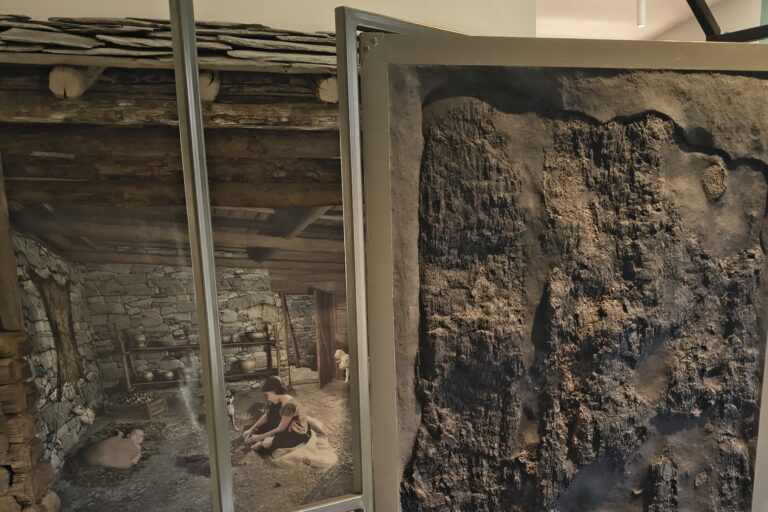
Another exceptional artifact is a door from Pescarzo di Capo di Ponte, dated between the 2nd and 1st centuries BCE. Made of larch wood, it is one of the best-preserved examples, offering insight into construction techniques and allowing us to imagine the daily life of the Camunni just before Roman domination. For the history of the Camunni enters a new stage with the expansion of the power that united the Mediterranean basin – Rome.
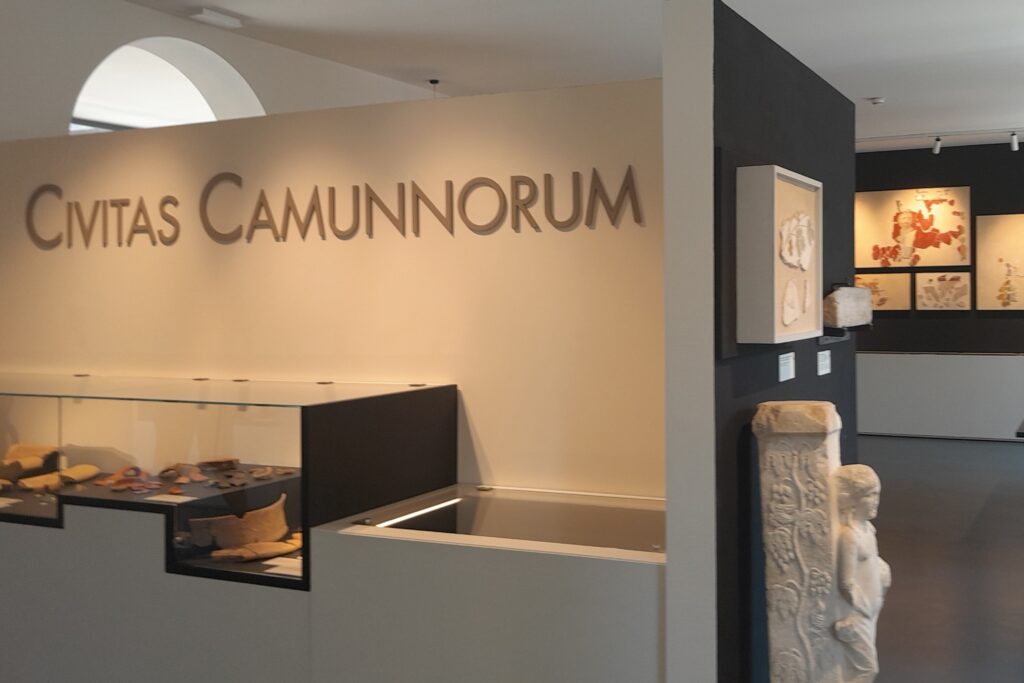
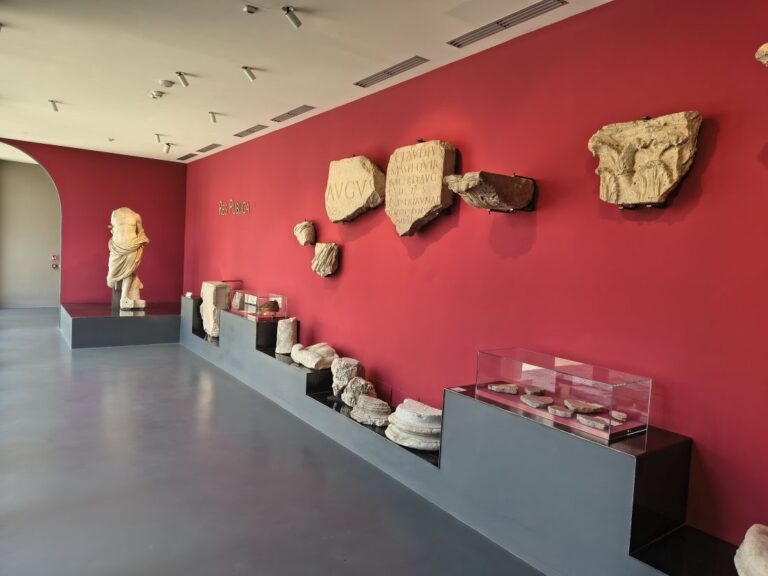
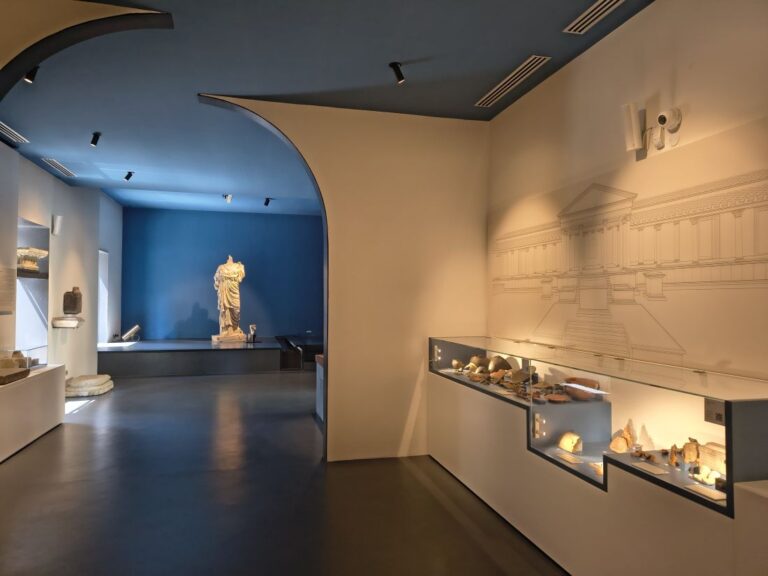
We notice that the invaders did not destroy what they found. The Romans practiced a particular kind of respect and care, preserving the identity and integrating the local community into the structure of their empire. The centrally located Camunnian settlement was granted the status of territorial administrator: Civitas Camunnorum. The former tribal capital, though obviously functioning with limited autonomy, experienced its greatest prosperity, expanded in the style of a classical Roman city. In it, we find a central square and the heart of political and commercial life – the Forum.
There is an Amphitheater for entertainment, the ruins of which we can still see today. There are also the Thermae, public baths, which were the center of social life. And there is the Santuario, a sanctuary built on a site of local worship. The Romans assimilated the indigenous Camunnian goddess, merging her with their own goddess Minerva, thus preserving the continuity of beliefs and creating a syncretic hybrid: Minerva Casuontina.
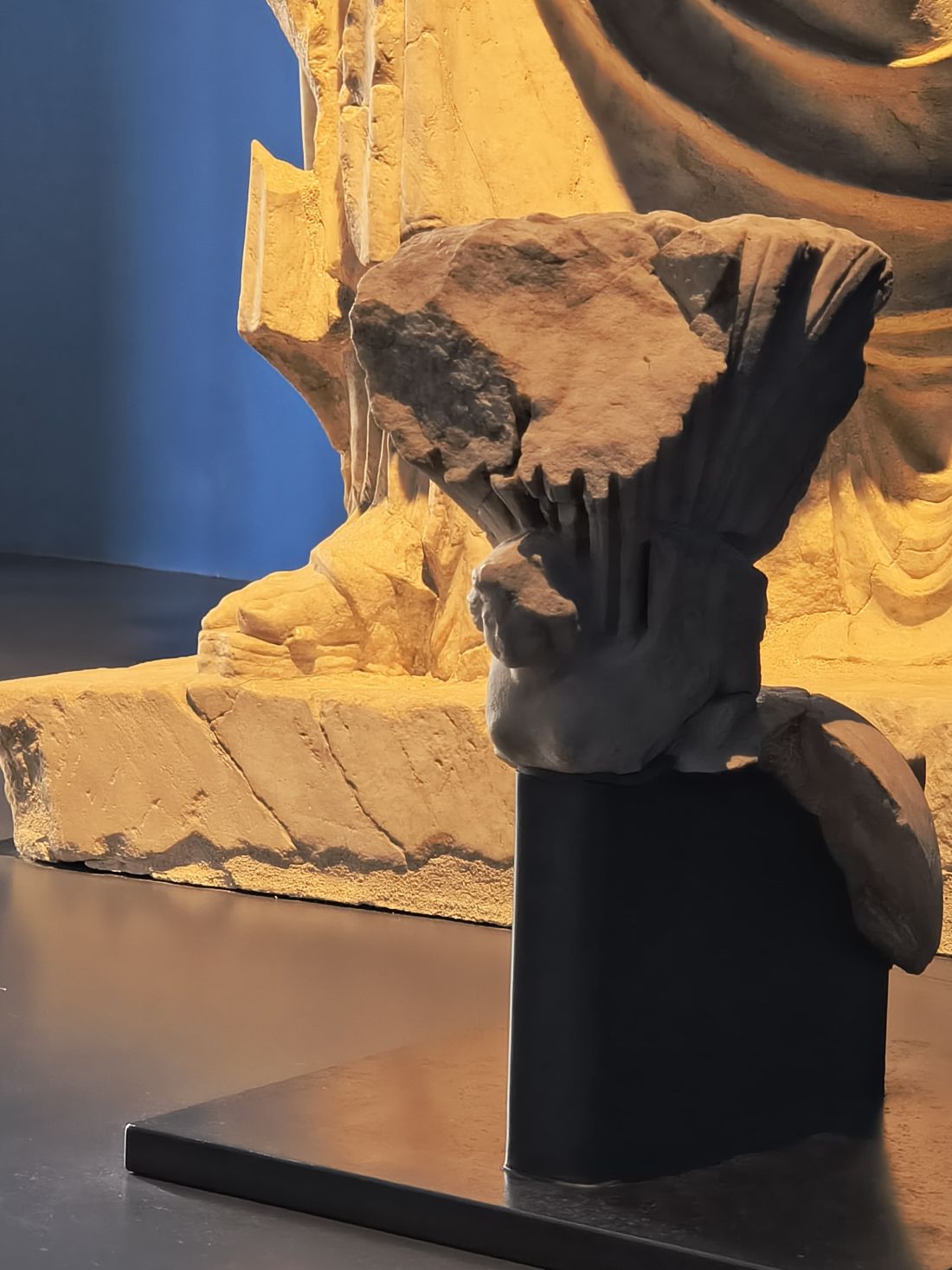
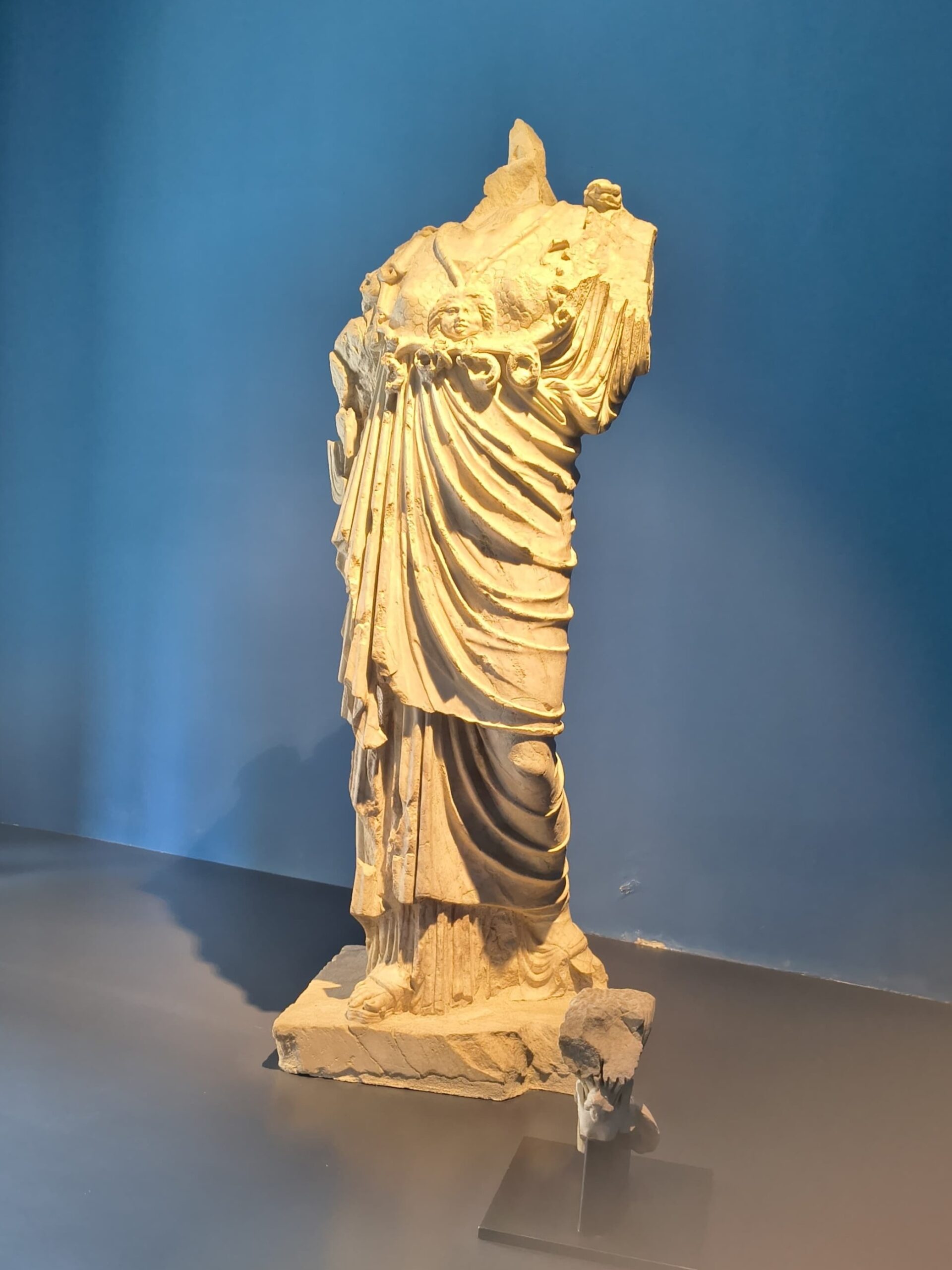
We can see her with our own eyes, as one of the museum’s most precious exhibits. The statue of the Goddess Minerva, found in 1986 in Breno, is a marble sculpture, a Roman copy of a Greek original from the 5th century BCE, and represents the guardian of wisdom, art, and craft. 10 Although the statue’s head and arms are missing (Christians attempted to brutally destroy the figure), its majesty and the precision of its execution are breathtaking. The presence of the sculpture suggests that the city was of significant importance, experiencing its greatest prosperity in the 1st and 2nd centuries CE, profiting from trade, agriculture, and the extraction of the valley’s natural resources.
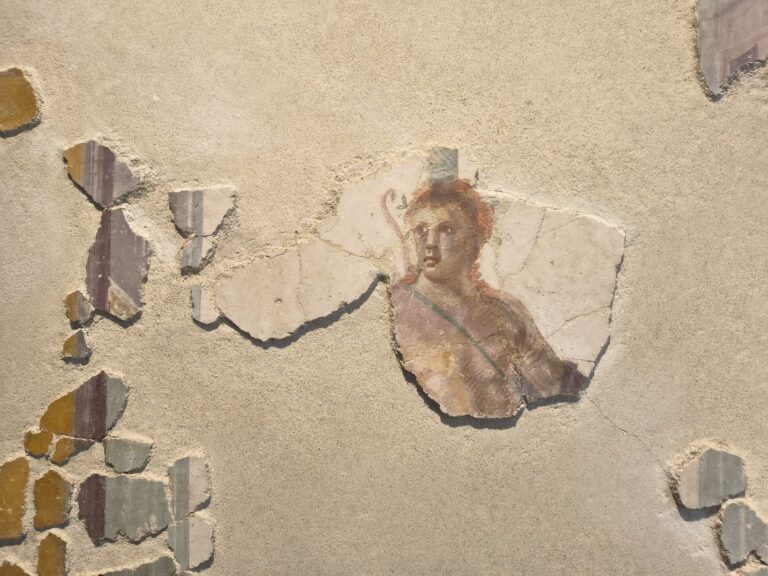
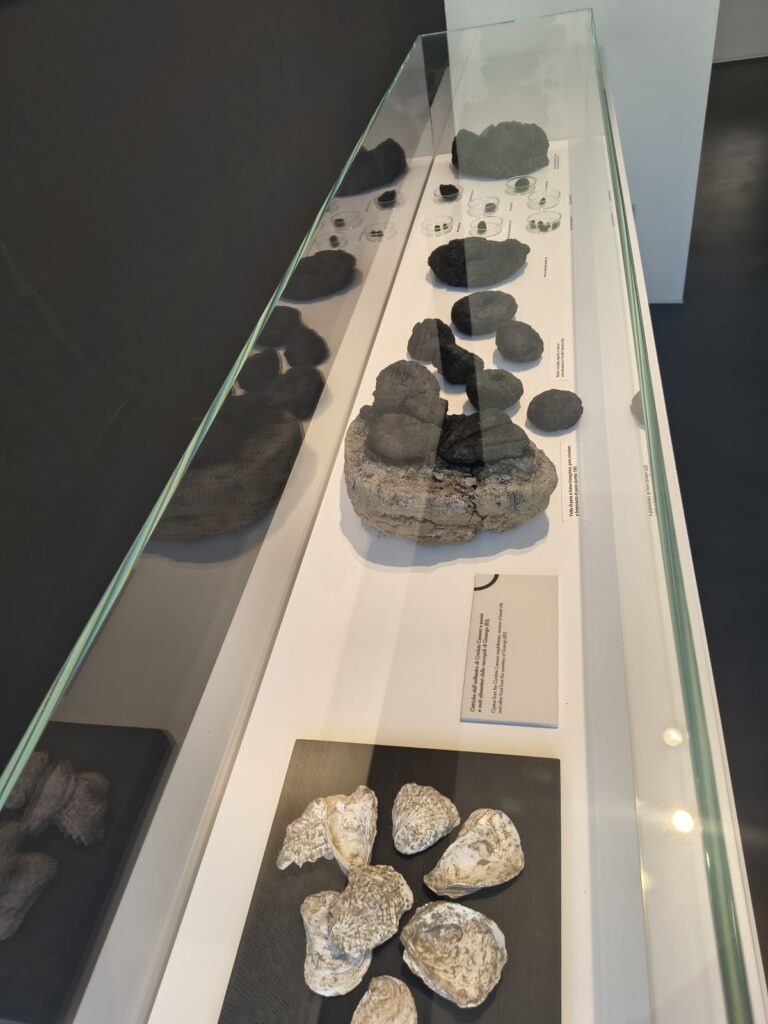
The Roman presence left a deep mark not only on the region’s urban planning and art but also on its customs. The museum’s section dedicated to necropolises serves as an excellent introduction to this topic. For how else can one 'understand transience’ if not by attempting to learn the rituals and beliefs? The artifacts presented in the Museum suggest that in the Roman world, death was a public event, and funeral rituals were intended not only to ensure the deceased’s peace in the afterlife but also to uphold the social status of their family. These practices evolved, yet certain key elements remained the same. These were the Conclamatio the final farewell, during which the body was washed, perfumed, and dressed in the finest attire. In the deceased’s mouth was placed Charon’s obol, a coin meant as payment for the ferryman of souls across the Styx. The body was displayed in the atrium of the home on the lectus funebris, with its feet facing the door, symbolizing its final departure. Then came the Cremation. The body was burned on a specially prepared pyre, the Bustum, and along with it were burned gifts and the deceased’s personal belongings. The ashes were collected into an urn (glass, ceramic, or stone), which was then placed in a tomb. The care of the grave and the memory of the deceased did not end on the day of the funeral. Tombs were often equipped with special installations through which the family could make offerings like wine, honey, or milk directly into the urn to „feed” the soul of the deceased (Libations). The Romans also observed special holidays during which graves were visited and flowers and food were offered, thus maintaining a bond with the afterlife and preserving memory. Archaeological research of Roman necropolises, such as those in Val Camonica, provides invaluable information not only about spirituality but also about the social structure, diet, diseases, and daily life of the people who were here thousands of years before us.
Middle Ages and Modern Era
The crisis that afflicted the Roman Empire, the threat from barbarian tribes, inflation, and the collapse of trade routes made life in unfortified cities dangerous. At the twilight of the Empire, the administration was reorganized, and Civitas Camunnorum lost its importance in favor of larger, fortified cities like Brescia (Brixia) and Milan (Mediolanum). By the end of the 5th century, with the final fall of the Empire, the city was but a shadow of its former glory and its monumental buildings began to fall into ruin, becoming a cheap source of building material. However, an interesting and well documented period in history begins with the arrival of a power that would dominate northern Italy for several hundred years. Cividate Camuno became part of the Venetian Stato da Terra. The Venetian period was a time of development for the iron industry, which had always been the valley’s main source of wealth. Families from Val Camonica who controlled the mines and forges amassed enormous fortunes. Local noble families erected castles and palaces and funded the creation of numerous works of art. During this period, many frescoes and paintings were created that still adorn the local churches today.
From mother goddess to witch
One of the darkest events that has been infamously recorded in the valley’s history was the brutal witch trials. By delving back into the spiritual roots, let us try to understand why this specific place became a bloody arena for witch hunts. Thanks to the work of archaeologists, we know that an ancient female cult existed here. Rock art and finds such as the bronze amulet suggest the existence of strong connections between the place and female deities. In agrarian societies, the figure of the Great Mother, or other local goddesses associated with the power of nature, was a central element of spirituality, guaranteeing the survival and strength of the community. Women, as herbalists, midwives, and guardians of the domestic hearth, possessed and passed on ancient knowledge to one another. When the Romans arrived in the valley, they did not eradicate these beliefs but integrated them into their own pantheon. And just as the local water goddess was merged with Minerva, so other nature spirits and deities survived, absorbed by Roman religiosity. Early Christianity also did not erase these traditions immediately. For years, old customs coexisted with the new faith. Former places of worship became sites for new churches, and pagan holidays were adopted and transformed into Christian ones. However, in the popular mentality, especially in hard-to-reach and isolated places, many pagan rituals survived. People still believed in nature spirits and practiced folk medicine. Women who possessed knowledge of herbs were respected, yet their „power” was not perceived by all as knowledge.
That which was not under the control of the new religion soon came to be considered dangerous. The delicate balance was disturbed, and the place gained the grim fame of the „Burning Valley” – one of the main centers of witch hunts in Europe. The publication of Malleus Maleficarum, the „Hammer of Witches” (1487), created the theological and legal basis for prosecuting the heresy of witchcraft, labeling folk beliefs as magic. The Council of Trent (1545-1563) and the Counter-Reformation period intensified the fight against all forms of heresy. It was a time of natural disasters, epidemics, and poverty. Unexplained illnesses, the death of livestock, or crop failures were attributed to the work of evil forces, and an accusation of witchcraft became a way to resolve neighborly disputes, get rid of a debt, or seize property. The most intense hunts took place at the beginning of the 16th century and were conducted with extraordinary ferocity. A victim was arrested, interrogated and tortured until she confessed her guilt and named other „accomplices.” Val Camonica earned the nickname „Valle degli indemoniati” – the Valley of the Possessed. The scale and cruelty of these events were so great that they alarmed the authorities of the Republic of Venice. The Venetians, known for their pragmatism and dislike of religious fanaticism that destabilized their territories, sent a special envoy to investigate the matter. The investigation revealed numerous abuses, the use of forbidden tortures, and the fact that many accusations were based on personal and financial motives. As a result, Venice intervened, limiting the inquisitors’ arbitrary actions, which for a time put an end to the mass executions. However, the witch hunts left a deep trauma in the consciousness of the local community. For centuries, it was a painful and shameful topic. Today, it is being rediscovered as a key element of the region’s history and a tragic example of how ancient, nature based beliefs and the role of women as their guardians, were at a certain point in history demonized and brutally suppressed in the name of ideological, religious orthodoxy.
CIVIDATE YESTERDAY AND TODAY
An artistic triptych and an existential truth
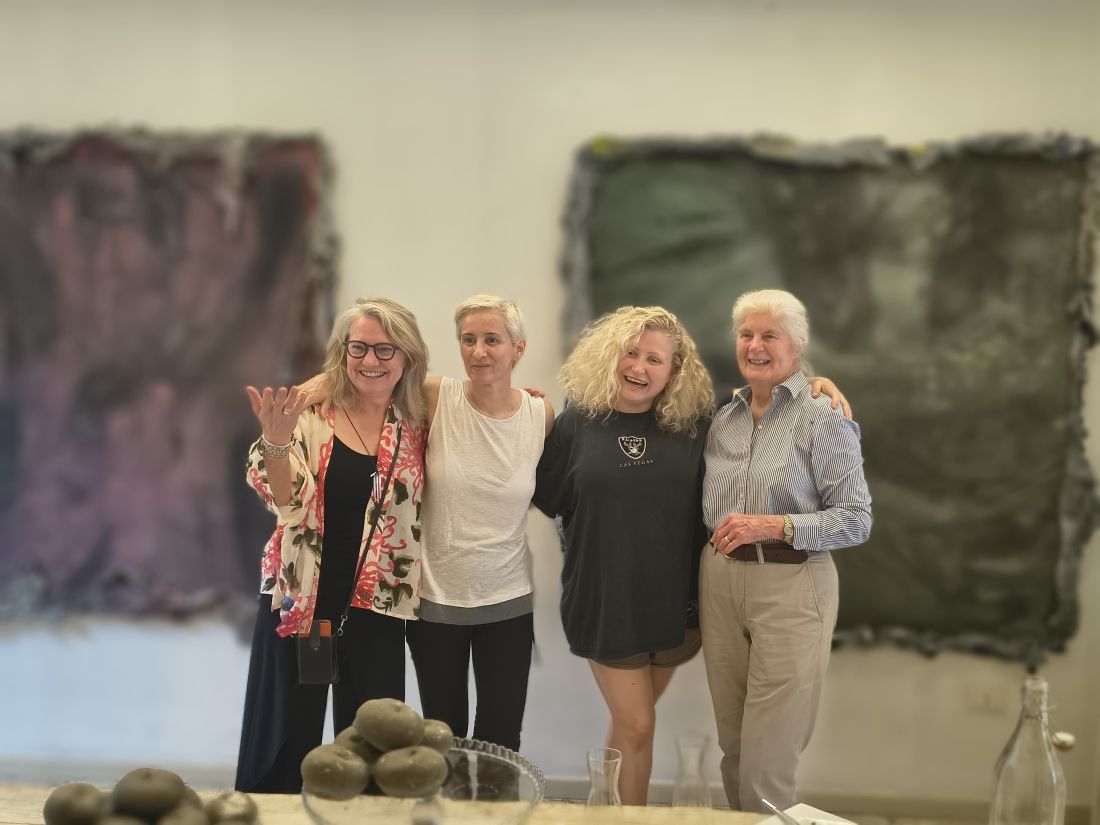
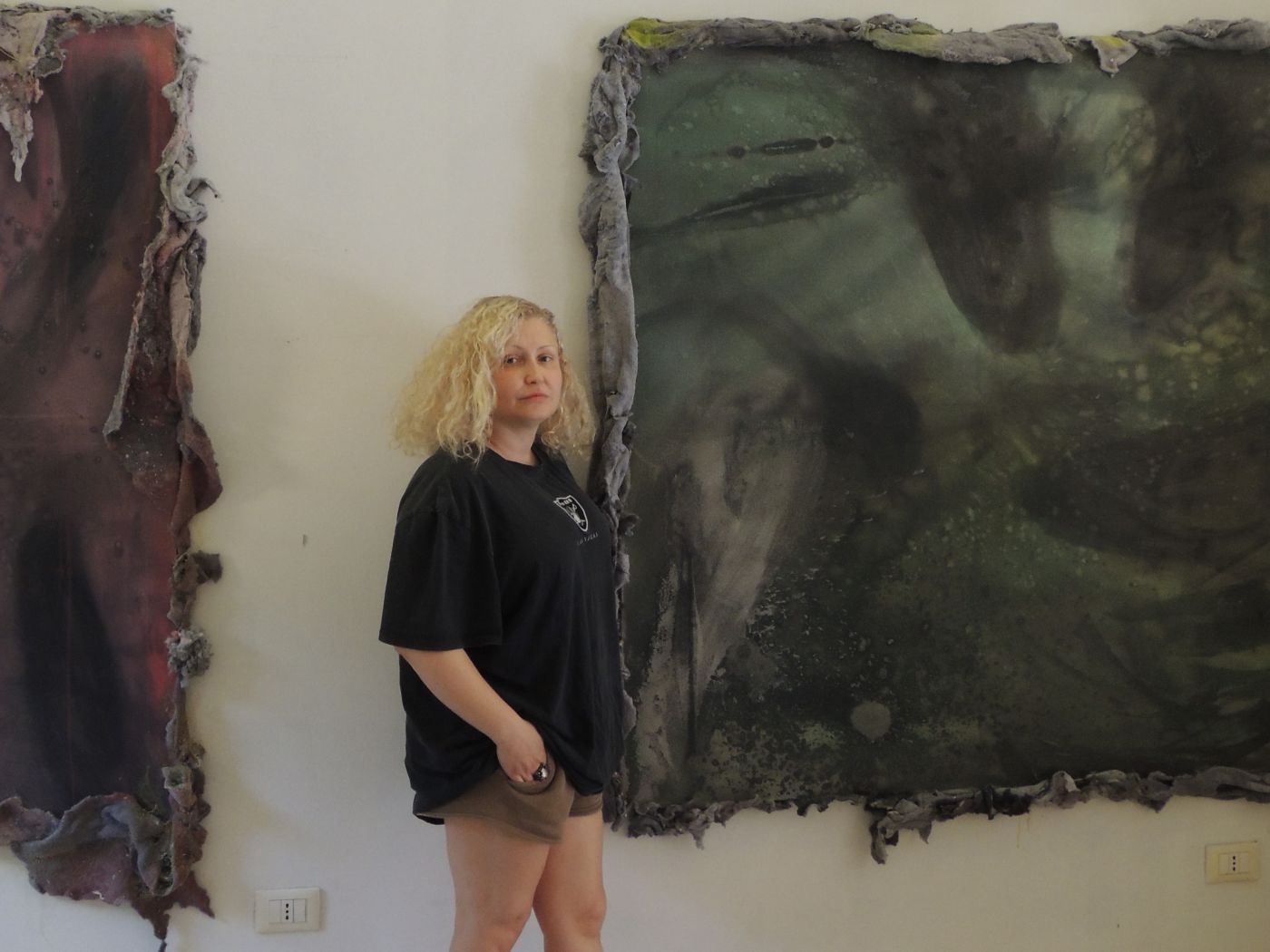
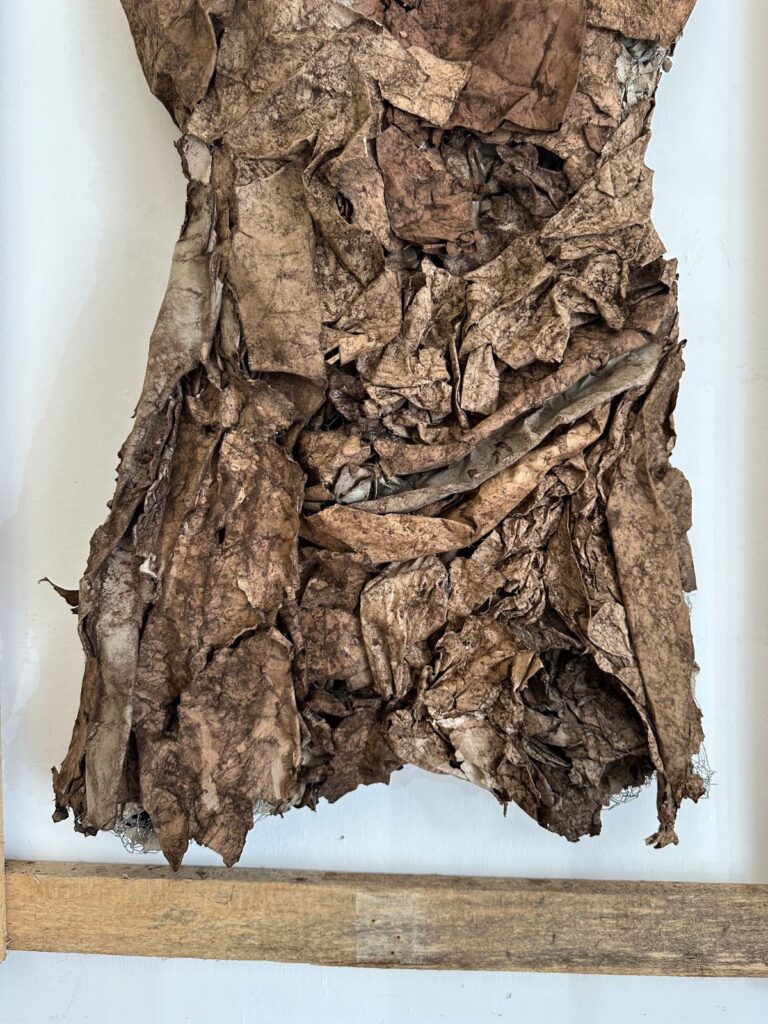
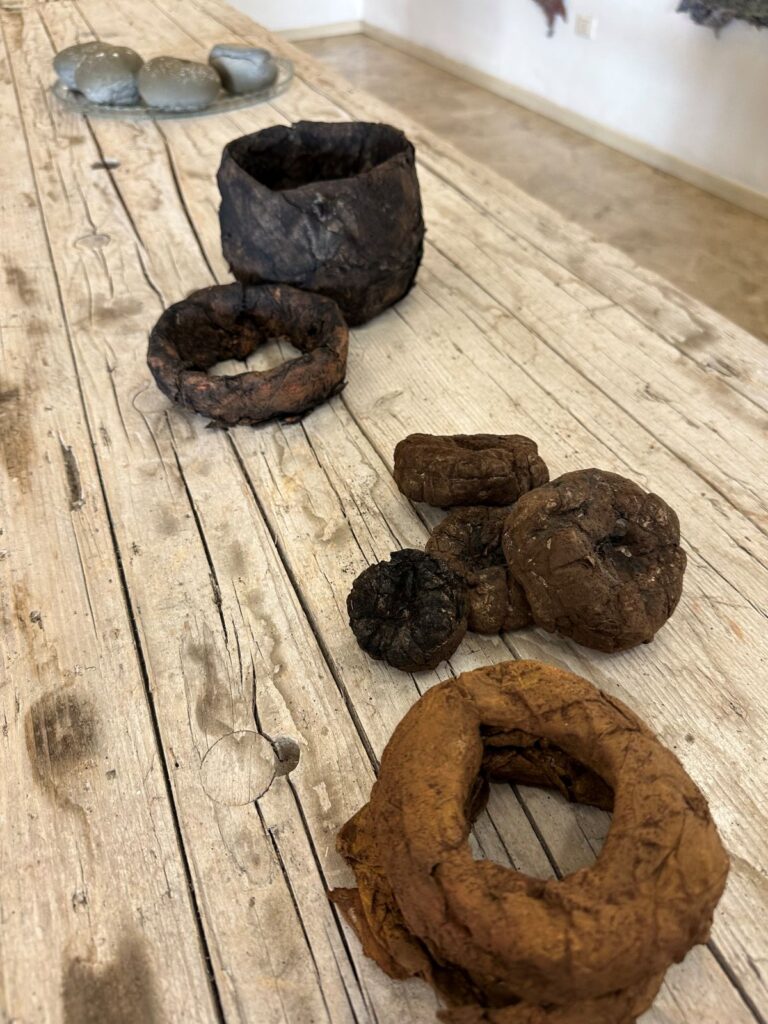
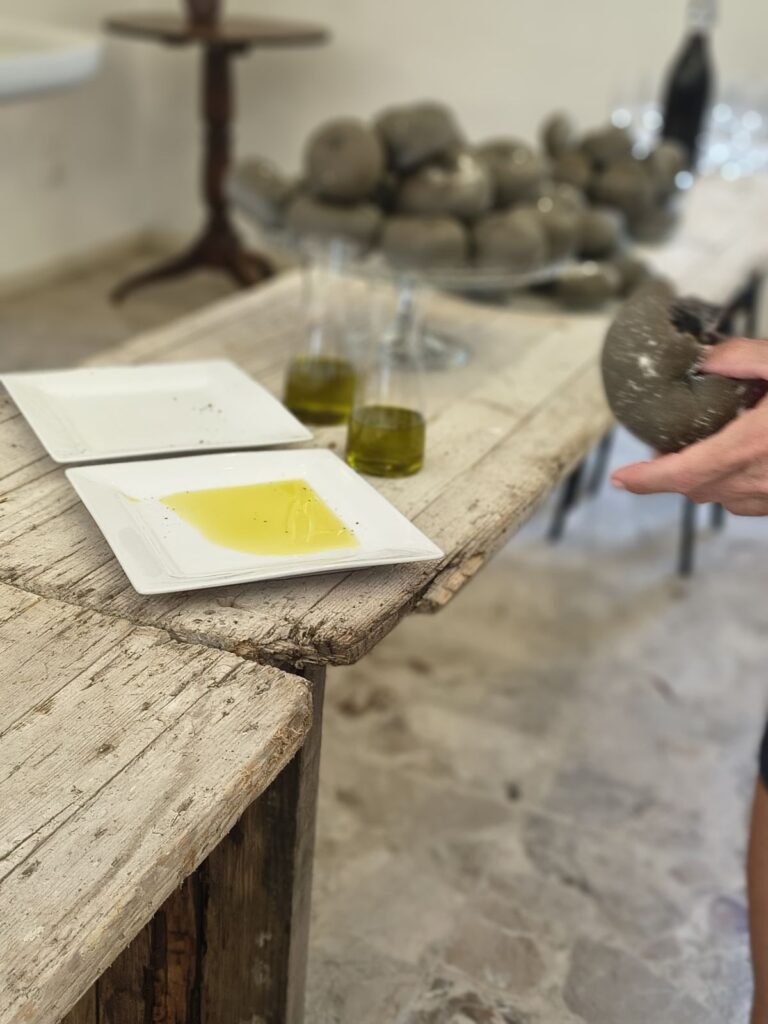
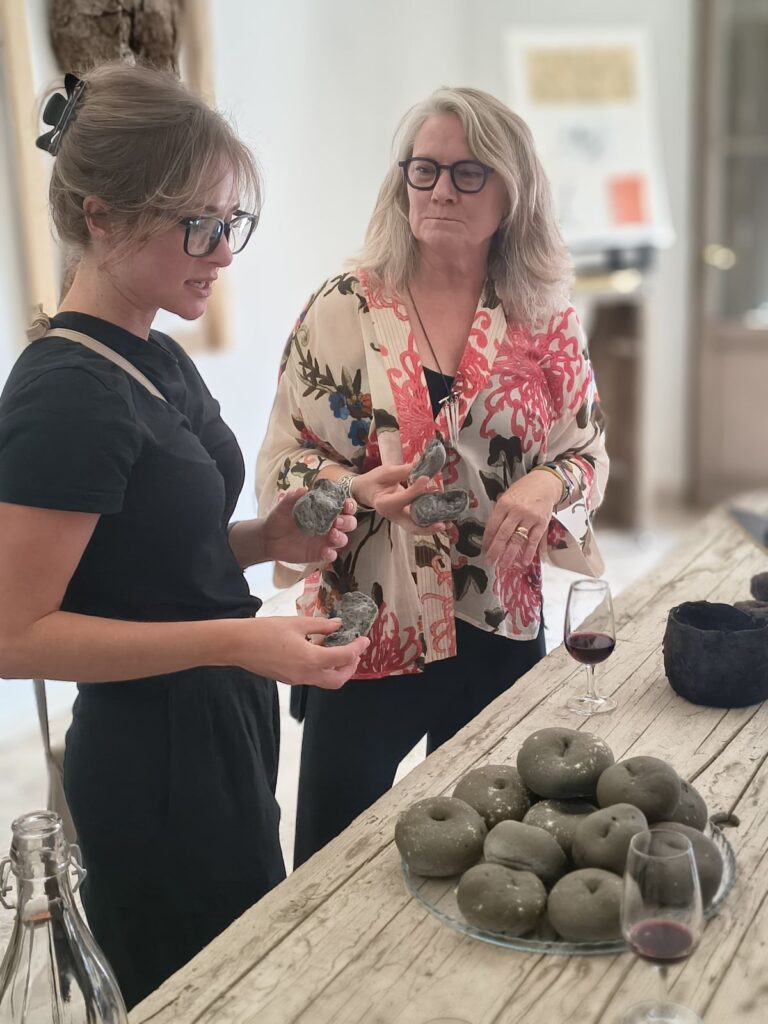
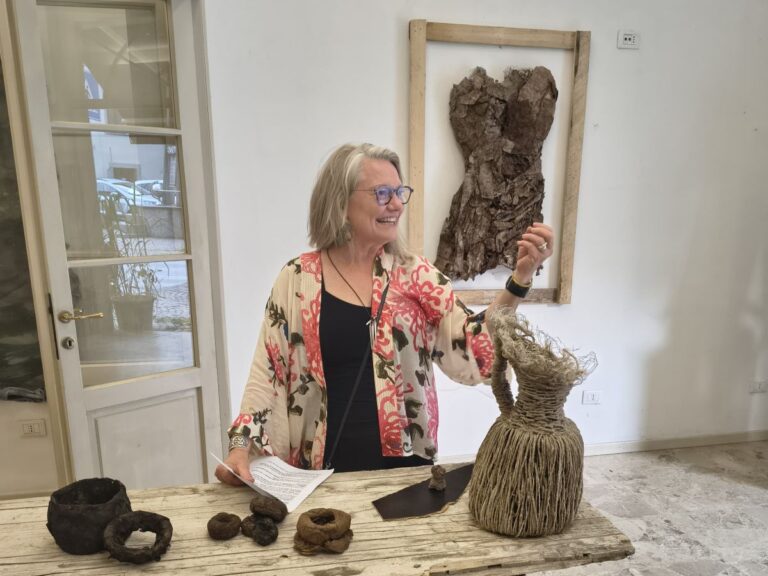
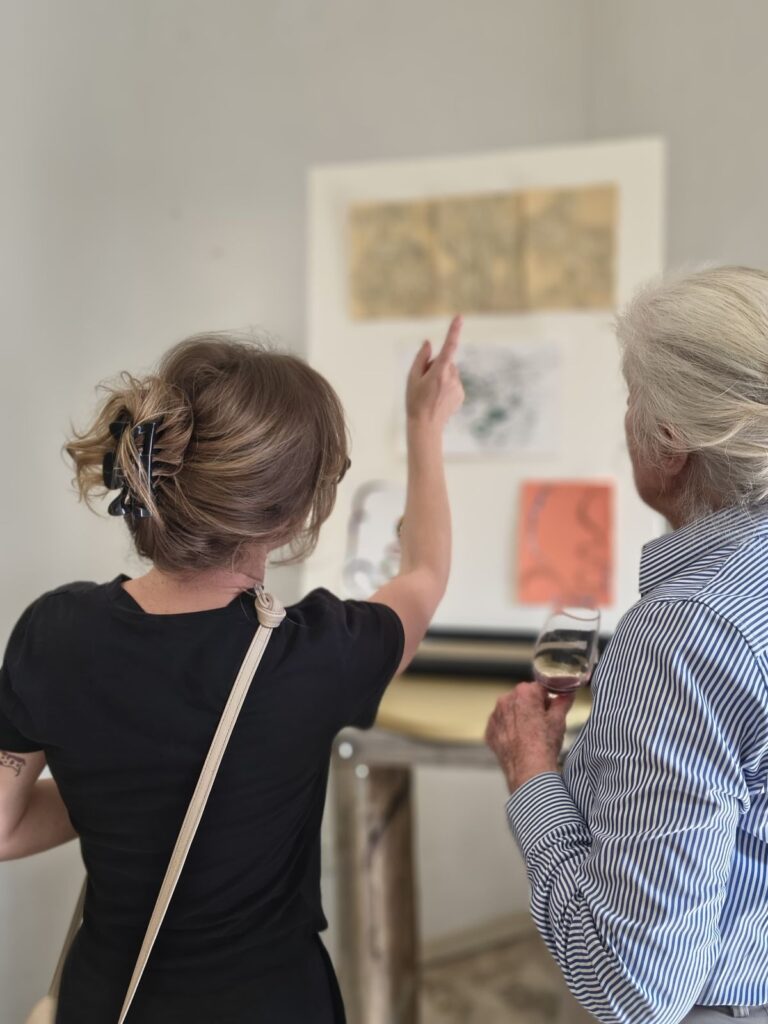
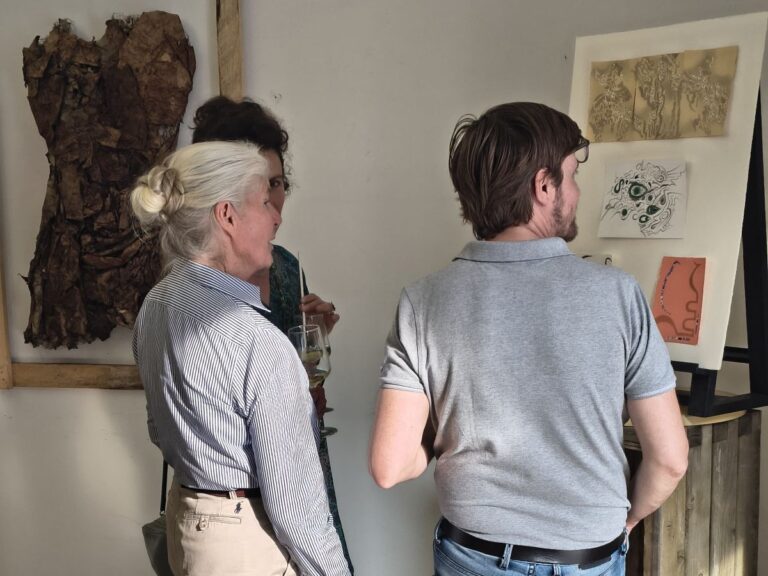
Let us return to the Lab Gallery Caffe, where quite a crowd has already gathered. The gallery has been transformed beyond recognition. The area where artists usually work is now immaculately clean. A buzz of conversation fills the room. The central wall of the laboratory is occupied by a diptych over three meters wide. Its colors, texture, and the shape of its frames have something unsettling about them. Just in front of the paintings, but leaving enough space for free passage, a long wooden counter has been placed. This symbolic table is filled with dishes of local olive oil and wine. On the countertop are bowls containing black-colored buns. An empty amphora also stands on the table. It is incomplete, damaged, and imperfect, as if weary from the passage of time. The main part of the gallery also looks different. The large glass display windows have been opened wide. An installation has been placed on the front wall so that it is also visible from the street. It is a sizable larch wood frame, within which a mysterious Corpus – an organic form echoing Roman sculptures – levitates, fragrant with walnuts and coffee. Right next to it, another installation is presented. On a stand that looks like a modest Evangelistary, several subtle drawings are displayed. It is a poetic commentary on the museum’s artifacts, which must be examined up close. More and more guests are arriving. They walk around, look, drink, eat, touch, comment, and ask questions. Their lively reactions are proof that the ritual has just begun. What makes these works affect the senses and imagination so strongly? Let’s find out by delving into the symbolism of the works.
The alchemy of matter – Flaminia Bonciani
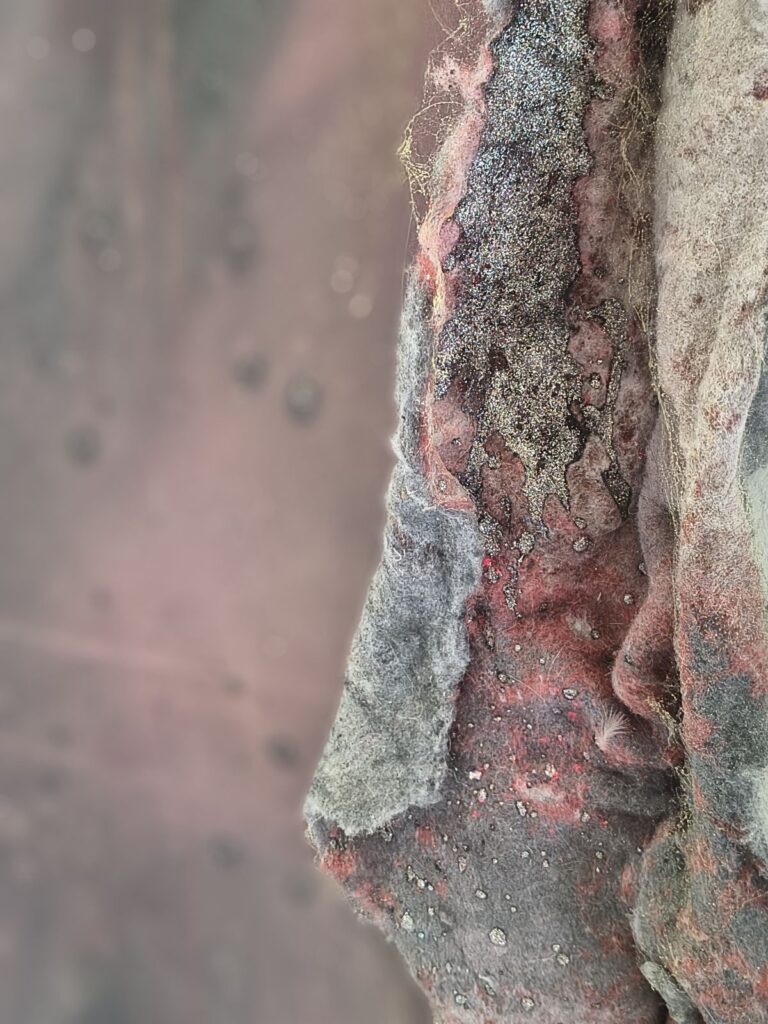
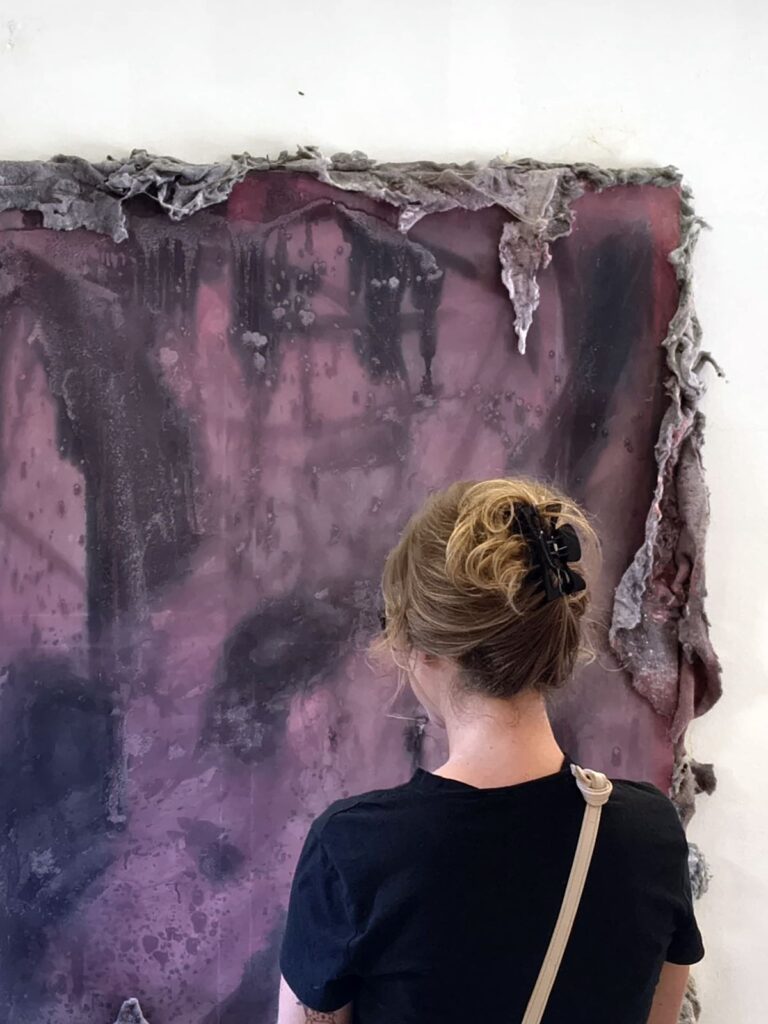
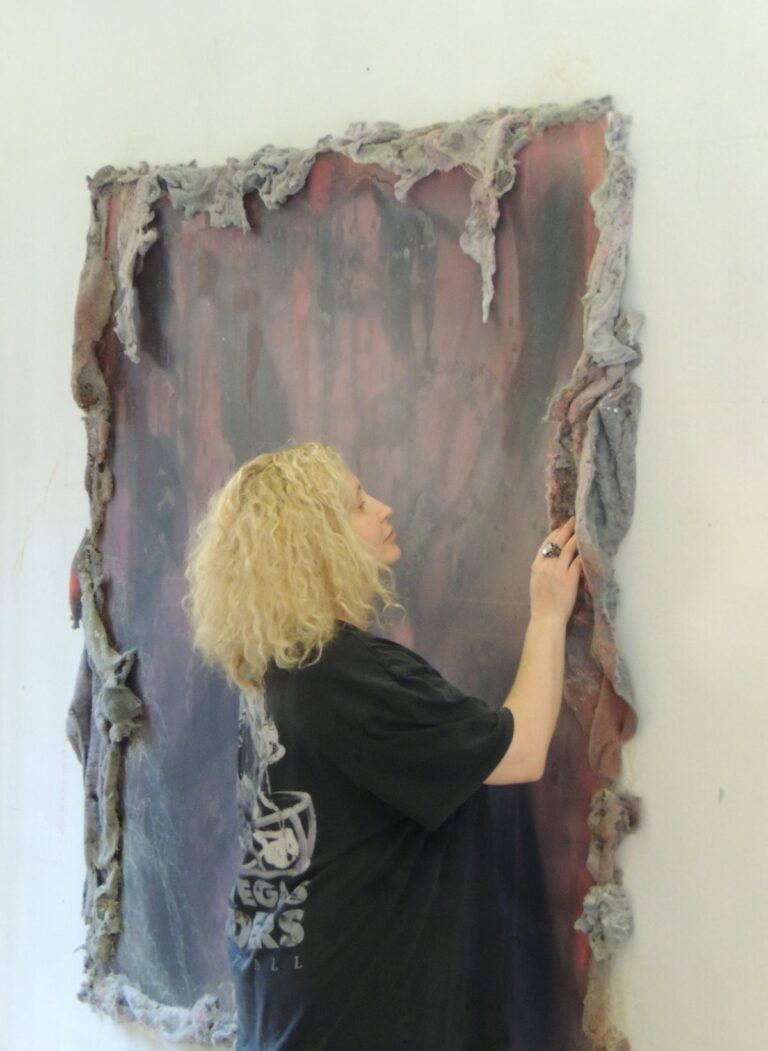
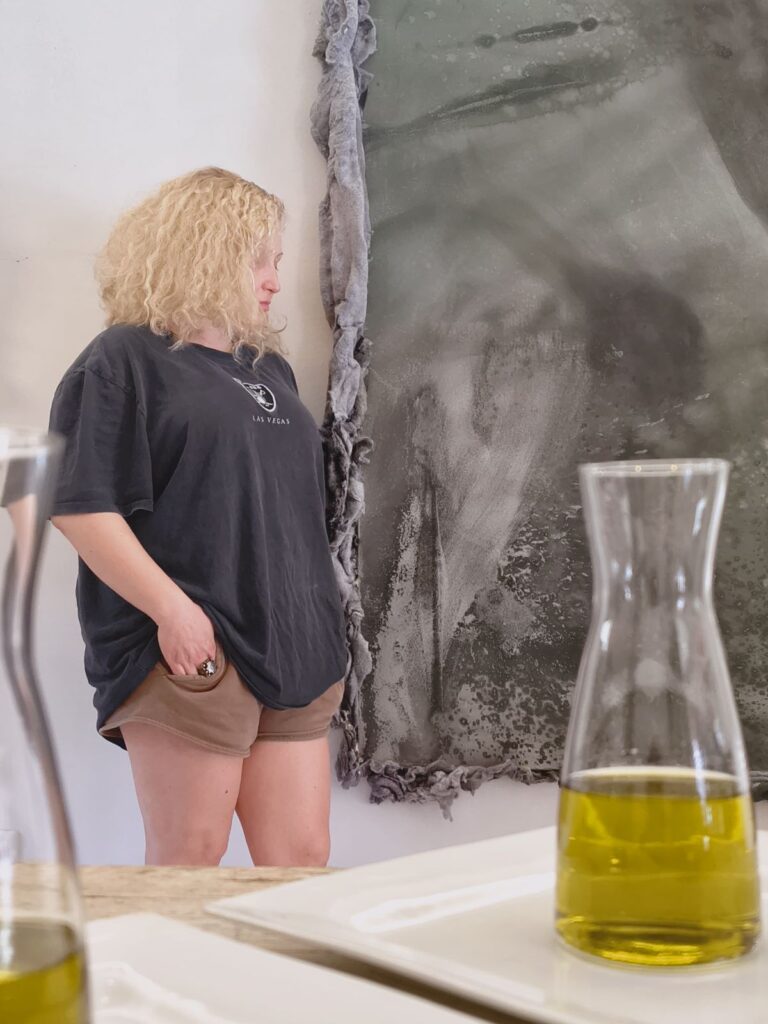
Intuition is a precise research tool; it is through it that we discover authenticity. Touching upon the valley’s sensitive nerve, the artist, in her abstractions, has given a voice to the victims and spirits, preserving the memory of history and local legends. The red and black painting „The Covenant” , inspired by the story of the Sabbaths and the witch Mandola, she dedicated to all those wronged by the Inquisition between 1518 and 1521. In creating River Spirits, she kept the painting in shades of turquoise, gray, and green, referencing one of the most important figures in Alpine mythology, the Anguana. These historical and folkloric themes have been processed into artistic matter in a special way. During their creation, the paintings lay flat on the ground. The artist bent over them „dancing in a trance” as it were and spontaneously applying successive layers. In the case of the diptych, both paintings were close to each other and were created almost simultaneously. Such an idea of communication between two canvases can be a metaphor for the dialogue of spirits from the local tale of the „Serpentoni”. Also ingenious is the conscious use of glitter as an equivalent of polvere magica – the magic powder of the witch Mandola. What is usually a cheap decorative effect, in this context, takes on new meaning and connects the painting with the legend. The decision to use diluted spray paints allows the artist to create translucent layers through which one can look into the depths of the painting, just as we look at the place’s history through the layers of time. The use of spent dryer felts and their transformation into frames is a radical gesture with strong symbolism. This material contains specks of dust, clothing fibers, hair, or skin – an intimate trace of human life, the meager essence of what is left of us. Such a „closed painting” may allude to relics, considering the context of the local population’s practices of collecting the remains of burned witches (their hair, bones, teeth) and creating protective amulets from them. The transformation of this same material into sticky „cobwebs” (horror, abandonment, a trap) and into damp „moss” attests to a deliberate action and complete control over the matter. A subtle detail deserves special attention – a red line that elevates Flaminia Bonciani’s work to a whole new level and is the key to interpreting its universal message. The „filo rosso” – the red thread, connects different forms of spirituality associated with the deep bond between humans and nature, which were combated by monotheistic religions. Numerous historians and anthropologists confirm that a deep substratum of pagan, animistic and shamanic beliefs existed throughout Europe. Christianity first tried to assimilate them and then to eradicate them. Drawing an analogy between the Alpine Rituals and the Great Eleusinian Mysteries would not be an exaggeration here. Both systems, though culturally distant, were an attempt made by people to establish direct contact with the sacred -the eternal energy of the cosmos. We can therefore read Flaminia Bonciani’s work as a dramatic reflection of the thesis about the timeless conflict between the imposed dogma of institutional religion and the eternal desire for an intimate, primal experience of transcendence.
Ritual in the face of nothingness – Megan Segre
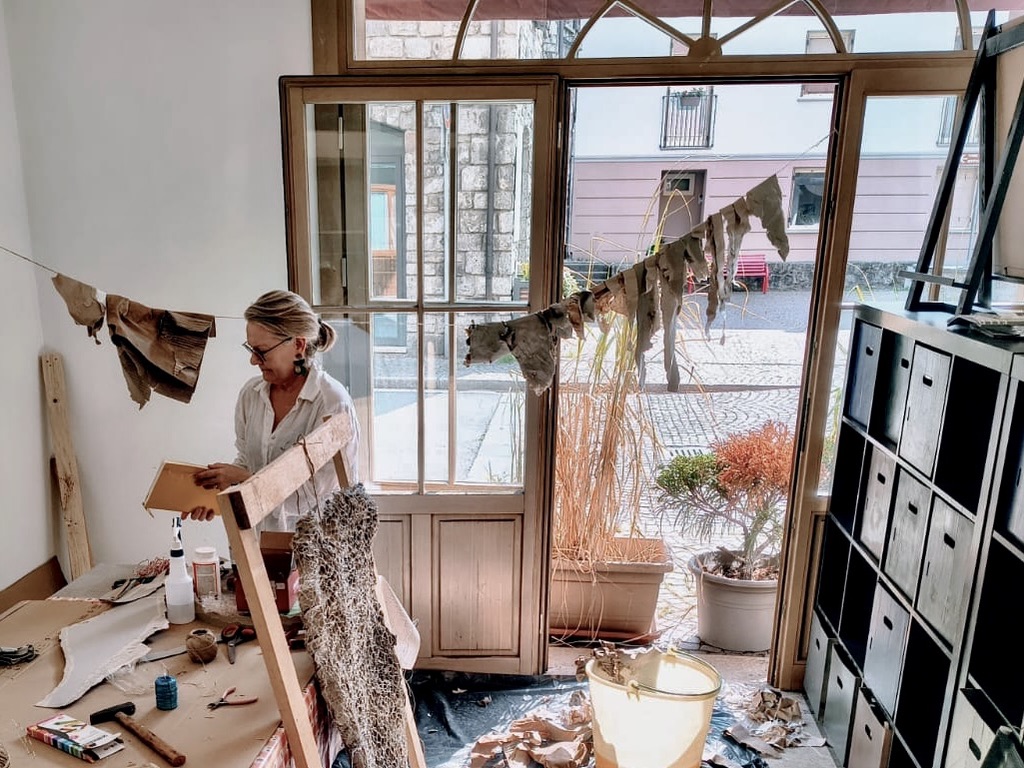
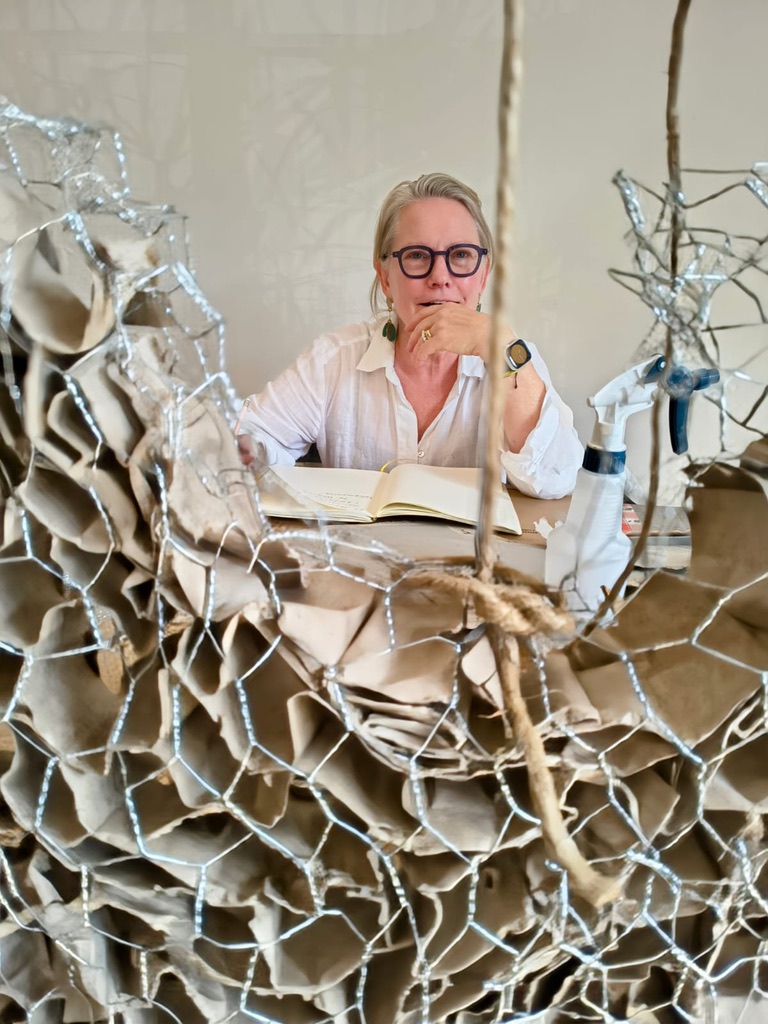
The artistic concept is a mature and sensitive response to the historical richness of the place. Megan Segre, through her creation, extracts its essence. By carefully directing the event, she makes it an ephemeral artifact, recorded only in the memory of the participants. The artist came from London. She brought with her a material that gave her sculptural freedom and integrity – paper. On site, she found cardboard, wires, a broken shelf. She carefully prepared the form of the structure. She used larch wood from an old pallet to create a frame for her installation. The paper was colored by soaking it in coffee grounds and in a walnut powder used by local women to dye their hair. Each piece of paper absorbed this natural dye differently, revealing a whole palette of black and brown shades. The coffee and walnut residues added texture to the sculpture and gave it its scent. The initial inspiration was a museum artifact: the scorched door from Pescarzo di Capo di Ponte. However, the core of the sculptural form became the body -a carrier of memory, traces, experiences, and wounds. The Body as an Archive. A sensual installation as the quintessence of an artistic philosophy. Its wooden frame, imitating a window or a door, is a powerful symbol. It is a passage, a portal between worlds, past and present, inside and outside. The „corpus” suspended in the frame is not an anatomical study. It is rather an organic, abstract form, reminiscent of archaeological finds – the torso of a Roman statue of the Goddess Minerva, or a piece of a prehistoric rock. Its „suspension” emphasizes a state of being „in-between.” The solitary Amphora is also an excellent reference to the museum’s collections. Archaeology provides us with thousands of objects that have survived for centuries thanks to the durability of their material. The artist reverses this order. She creates a form alluding to classical vessels, but she makes it from a material destined to decay. This is an incredibly poetic commentary: What is the true carrier of memory? Stone, or perhaps a fleeting shape, an idea, a recollection?
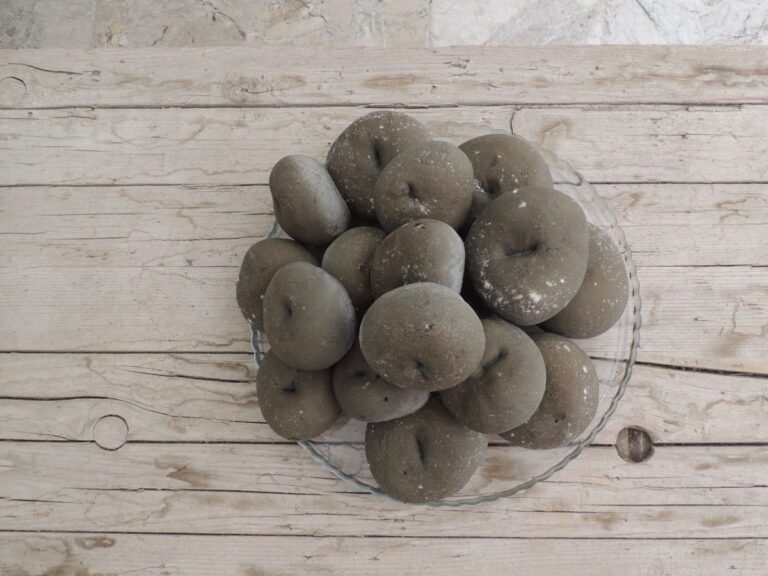
Megan Segre strives to transcend the boundaries of purely visual perception. Her in situ installations engage sight, touch and smell, and in the case of this exhibition, also taste. It is a conceptual masterpiece. The appearance of the black buns, inspired by finds from the Roman necropolis (charred remains from funeral pyres), is in itself a powerful statement.
Segre enhances it by inviting guests to a feast, to physically and symbolically „consume history.” By offering guests wine and olive oil, the essence of Mediterranean culture and a symbol of the earth’s fertility, the artist combines an act of mourning with an affirmative, life-giving gesture.
In this way, she creates a complete ritual in which death and life, past and present, mourning and celebration, are inextricably linked. By making us stand face-to-face with transience, she reminds us that although there is noescape from death, there are moments in our lives that have a taste of eternity. These are moments of closeness, unconditional love, awe, intense aesthetic experience and a sense of community.
A lasting trace against transience – Jeannine Cook
Art responds to human needs. It tries to save identity through a lasting trace. It is an attempt to give a finite life a form that will resist entropy and oblivion. This is exactly what the prehistoric Camunni did. They left clues for their descendants and created drawings that cannot be destroyed. Carvings on the rocks. A silent scream of „I was here.” A sign and a manifest of the will to exist. Jeannine Cook did not come to the valley by chance. Her history and artistic sensibility fit perfectly here. The artist works in an ancient and extremely demanding technique known as silverpoint. She uses a stylus made of a soft metal (silver, gold, copper, lead), drawing on a specially prepared surface. Most often, it is paper or parchment coated with a layer of ground, traditionally made from a mixture of animal glue and powdered
bone (so-called gesso). When the metal stylus moves across the grounded surface, it leaves behind tiny particles of metal, creating a delicate and incredibly precise line. This technique was popular in the late Middle Ages and the Renaissance, before graphite became widely available. It was used by the greatest masters, such as Leonardo da Vinci, Albrecht Dürer and Jan van Eyck. The choice of this technique by a contemporary artist is therefore a conscious reference to a great tradition.
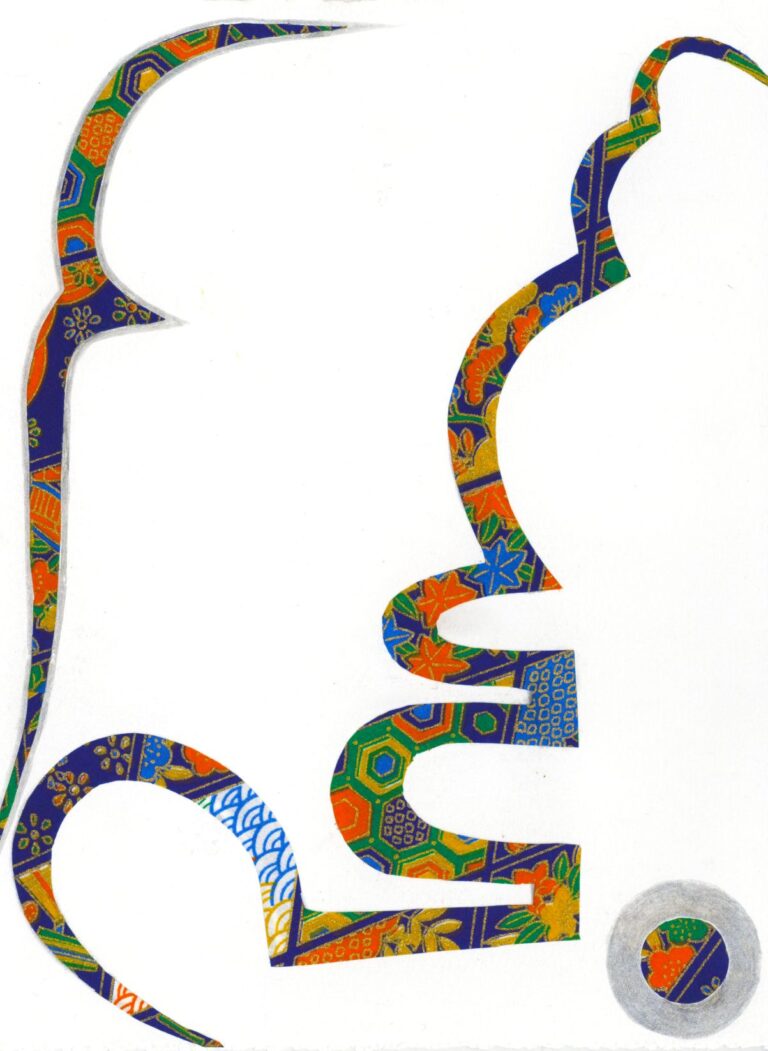
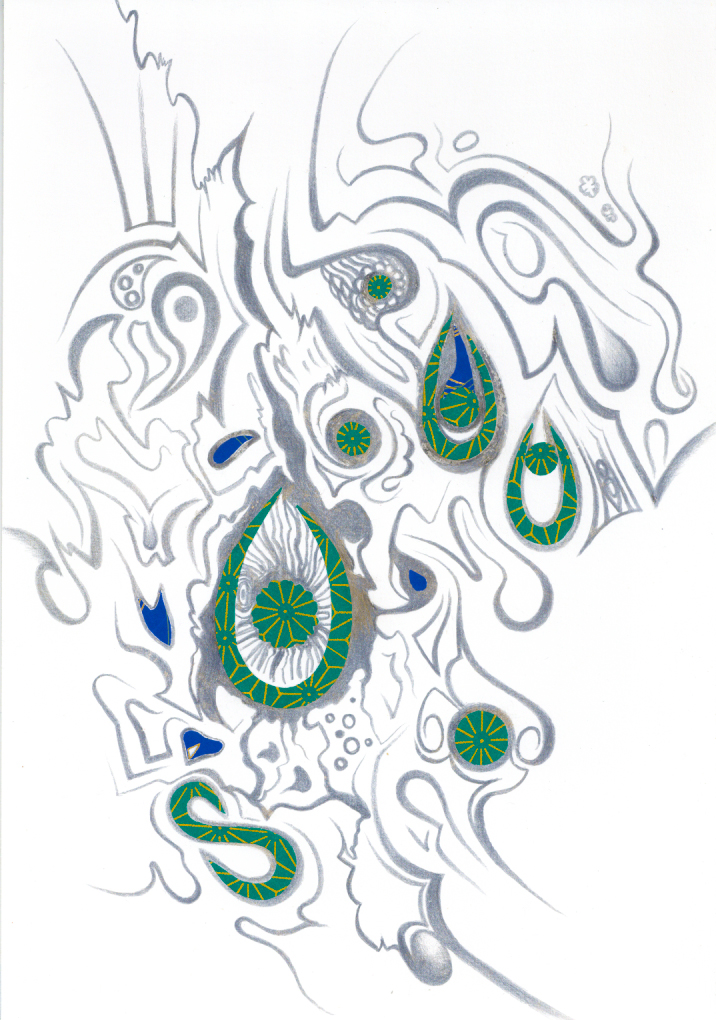
A drawing made with a metal stylus is practically impossible to erase. Every line is final. This requires the artist to have absolute precision, a steady hand, and to think deeply about the composition before making the first mark. This characteristic connects metalpoint with the rock carvings of the Camunni – both are permanent, inerasable records of the artist’s intellectual gesture. Works made with a silver stylus (silverpoint) have another unique property – they oxidize over time. The gray and cool line, upon contact with the air, gradually darkens, acquiring a warm tone. The drawing „matures” with the passage of time, and this very change becomes an integral part of the work. This slow transformation can be a beautiful metaphor for the layers of history that change the face of Val Camonica. Cook’s drawings emanate silence; they are intimate, meditative, and lyrical. This is the result of absolute concentration. A focus on a fragment of reality,
the texture of a stone, the play of light on a wall, or the delicacy of a plant. In the case of the works presented at the exhibition, the artist’s inspiration came from the nuances of archaeological finds, remembered from her visit to the Museum. The precision of the line and the flawless tonal subtlety here are admirable. Looking at Jeannine Cook bent over a sheet of paper, we see a humble and wise artist who does not compete with the monumentalism of her surroundings. She came to the valley to help us understand that it is precisely through art, ritual, and community that we can make our lives intense, valuable, and meaningful. Her silver stylus, like a sensitive seismograph, registers the finest vibrations. Whispering that the greatest stories are often written in the most subtle of traces.
In antiquity, the term „provincia” meant, among other things, an area conquered by Rome.
The Roman road, Via Valeriana (a name debated by historians regarding this section), connected Brescia with Cividate Camuno and subsequent settlements in the valley; it was crucial for administration, troop transport and the exploitation of natural resources (mainly iron).
The rock art in Val Camonica was inscribed on the UNESCO World Heritage List in 1979 as the first site in Italy. The complex includes over 300,000 petroglyphs created over a period of about 8,000 years; it is a stone book telling the story of the evolution of society, beliefs, and the daily life of prehistoric people.
Caffe del Corso Art (currently Lab Gallery Caffe); An art gallery and studio that hosts artistic workshops and laboratories. An exhibition space where artists participating in residency programs and cultural figures meet. The owner is Silvia Gosio a graduate of the Brera Academy of Fine Arts in Milan and an art enthusiast. Her gallery has also retained its identity as a historic café and bar with Italian spirits, thus functioning in the city space as a place for rest and meetings.
The event is the result of an international residency program; it takes place thanks to the collaboration between RUC Art Residency, Lab Gallery Caffe, and the Museo Archeologico Nazionale della Valle Camonica.
- The institution was founded in 1981 and presents to the public finds recovered from excavations conducted in the valley since the late 17 th century.
- The rock carvings are located in an open area and are a UNESCO World Heritage site. These prehistoric and protohistoric works, created over thousands of years, depict scenes of hunting, agriculture, duels and also contain religious symbols and topographical maps; the Museum places them in a historical context. Finds such as „Dos dell’Arca” type pottery relate to the material culture of the people who created this extraordinary art.
- Dated to the 5th century BCE; it symbolically depicts a figure with raised arms. This figure is in a boat whose bow and stern are shaped like birds’ heads.
- Rome’s expansion to the north (1st century BCE – 1st century CE) aimed to secure Italy from invasions by peoples from beyond the Alps and to control strategic Alpine passes, which were key trade and military routes. As part of a military campaign, Roman forces, led by the future emperor Tiberius and his brother Drusus the Elder, conquered the Camunni tribe.
- The statue of Minerva is one of the most important finds testifying to the process of the valley’s Romanization. The sculpture is modeled on the Athena Hygieia – a work attributed to Pyrrhus, a student of Phidias. The statue from Cividate Camuno is one of only three known Roman copies of this specific
Greek masterpiece in the world. The other two are the Hope Athena, currently at the Los Angeles County
Museum of Art (LACMA), and the Farnese Athena, which can be admired at the National Archaeological
Museum in Naples. The fact that one of such rare copies is found in Val Camonica attests to the importance and wealth of this Alpine territory during the Roman Empire. - The weaving in of Krzysztof Michalski’s thought, especially the theses from his fundamental work „To
Understand Transience,” provides the philosophical key that unlocks the deepest layers of meaning for
the artistic project. - In religions and mythology, one can find many female figures who were worshipped as goddesses, spirits, or other beings of divine status. They fulfilled various roles—related to nature (deities of rivers, forests, elements); they were often associated with fertility, the home, love, or the cycle of life – birth and
death – and destiny. - The witch trials in Val Camonica from 1518-1521 are among the bloodiest in Italian history. Conducted
by the Inquisition, they led to the deaths of several dozen people at the stake and the accusation of a thousand others, mainly women. The main accusation, repeated many times in the records, was of Sabbaths at the Tonale Pass. In the collective imagination, this pass became a mythical meeting place for witches. Descriptions of orgies, profanations, and blasphemous rituals are a constant element of the demonology of that period. - Flaminia Bonciani, ‘The Coven’ and ‘River spirits’; Each work measures 150/150cm and was created
using the author’s technique : oil paint in areosol and Chinese ink on canvas; frame – felt and dryer filters,
glitter. - cividate antiche pane – black-coloured buns that local baker Domenico G. Sorenti baked from segalè
wheat with added charcoal, designed and commissioned by Megan Segre - Megan Segre “Cividate Antiche e Moderne”; Materials: larch wood, wire, paper, glue, natural pigments,
coffee grounds and walnuts; Dimensions: 100cm x 60cm; torso with frame: 133cm x 90cm - Mandola – the most powerful witch living in the forests of the valley, assisted in her spells by a bunch of forest goblins (folletti). The witch produced a magic powder and sent her spirits into the forest with it. The goblins scattered it on the forest floor at night. Where it fell, unnaturally large, beautiful but deadly poisonous mushrooms grew. The legend is an example of how unexplained natural phenomena were explained in the popular imagination. It embodies the fear of the untamed side of nature and the fear of secret knowledge that was attributed to female herbalists. For the Inquisition, such stories became “proof” of a pact with unclean forces
- Historians have not established the exact number of victims. It is assumed that about eighty people
were burned. One thousand were indicted and tortured. The trials were fuelled by the zeal of several inquisitors from the Dominican and Franciscan orders. Their methods based on coerced confessions led
to an escalation of terror - Anguana (Agana, Eguana) – a figure from the Alpine legends of northern Italy, being a water spirit or
nymph, inextricably linked to springs, streams and mountain lakes. On the one hand, she could be a
benevolent protector of the waters and teach people useful crafts; on the other, she could be capricious,
dangerous and seduced men to lure them into a trap. The figure embodies the duality of the beautiful and
the dangerous force of nature at the same time. - Bonciani has developed her own technique. She dilutes high-quality oil paints in a solvent such as turpentine, spirit or a specialised medium. She places the liquid mixture in a can to create a spray. She
also uses an airbrush, a precision tool with a compressor that allows her to spray a very fine mist of paint
and gives the artist complete control over its flow, pressure and degree of dispersion. - Legends about dragons and water snakes (serpentoni) inhabiting rivers and lakes are common in
Lombardy. The story of a pair of dragons separated and searching for each other on opposite banks of a
river is a local version of the universal myth of separation and eternal longing - A documented historical fact proving that, despite the fear of the Inquisition, popular faith was still alive and practised; Muraro Luisa „La signora del gioco. La caccia alle streghe interpretata dalle sue vittime” La Tartaruga Edizioni, Milan, 2006
- ‘Red thread’ is a symbol of connection, interconnection and shared history; the metaphor is used to
refer to a theme or idea that recurs and binds different elements together. Here it is confirmed by the
research of historians, especially Carlo Ginzburg, who described how the Inquisition deformed an ancient shamanic fertility cult from the Friuli area, interpreting it as a satanic witch sabbath; Ginzburg Carlo
Benandanti ‘ Stregoneria e culti agrari tra Cinquecento e Seicento’ Einaudi, Turin, 1966 - Megan Segre conceived and curated the event entitled “Civiste yesterday and today”. She placed in situ
installations in the exhibition space that provided a poetic commentary on the museum’s artefacts. The artist is known for her experimentation with matter. She juxtaposes materials such as stone or metal with the ephemeral and organic (wax, textiles, perishable plastics and even food materials). This contrast tells a story of the fragility of life and of transience. Her works often balance on the border between existence and decay. - Jeannine Cook is an American artist ( born 1944) who is characterised by her maturity and mastery of
her craft as well as her vast experience. Cook is a traveller. Her work is often the result of artist residencies
and travels around the world. Her art stems from a keen observation of nature, architecture and objects that bear the marks of history. The artist works with detail, focusing on fragments and traces. She is inspired by old walls, sculptures and botanical forms. She is internationally recognised in the field of
drawing. Her work is in the permanent collections of prestigious institutions such as the British Museum in London, the National Museum of Women in the Arts in Washington DC, and the Fogg Art Museum at
Harvard University. She is also a member of many art associations and regularly teaches workshops on metalpoint technique, sharing her knowledge and passion. - Classic studies on historical drawing techniques including metalpoint: Ames Lewis Francis ‘Drawing in
Early Renaissance Italy’; Yale University Press, New Haven, 2000 ; Watrous James ‘ The Craft of Old
Master Drawings’ University of Wisconsin Press, Madison, 1957 - Jeannine Cook Ein Triptychon aus Silberstift auf Washi-Papier: “BC Roman tiny mould for a pointer or
pin” , “Echoes from Rome”, “After a Roman terracotta mould for a pendant